Plum Juice Concentrate
Bulk plum juice concentrate for commercial food and beverage manufacturing, providing concentrated plum flavor, natural fruit sugars, acidity and red-to-purple fruit color in a high-solids liquid format. Conventional and organic options are subject to crop and supplier availability.
Concentrated stone-fruit character with natural sweet-tart balance.
Plums belong primarily to species within the genus Prunus, including European plum (Prunus domestica) and Japanese plum (Prunus salicina). Cultivars vary widely in skin and flesh color, sweetness, acidity and aroma.
Commercial fruit can range from yellow and red to blue-purple and nearly black. Red and purple varieties can produce concentrates with deep reddish-purple tones, while lighter cultivars can produce more amber or red-brown material.
Plum juice concentrate is produced from sound ripe fruit by crushing and pressing, followed by clarification where required and controlled evaporation of water. Concentration increases soluble solids and reduces the volume required for storage and transportation.
- Characteristic sweet-tart stone-fruit flavor
- Natural glucose, fructose and fruit acids
- Color varies strongly with plum variety
- Commercial concentrate commonly around 65° Brix
- Some commercial grades available around 68° Brix
- Conventional and organic options may be available
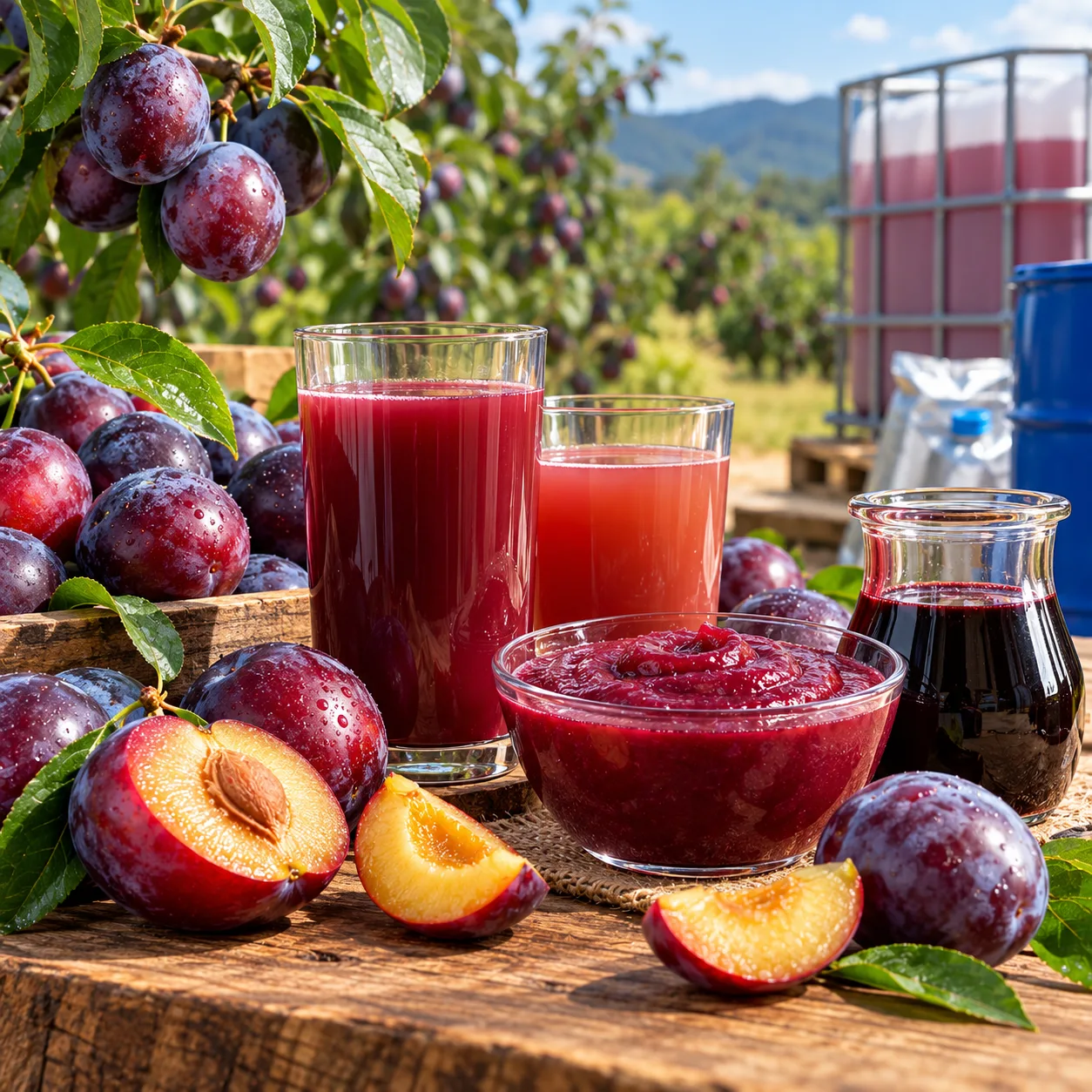
Typical commercial specifications to review.
Approximately 65° Brix is a common industrial specification for red plum juice concentrate, although commercial 68° Brix grades are also available. Exact acidity, color and clarity depend strongly on cultivar, origin and processing method.
Soluble Solids / °Brix
A common commercial specification is 65 ±1° Brix. Some concentrates are manufactured closer to 68° Brix. The actual concentration affects dilution ratio, fruit-solid delivery, sweetness and freight efficiency.
pH
Commercial concentrate commonly falls around pH 2.8–4.0. Red plum specifications around pH 2.6–3.5 are also available, so the exact supplier value should be used during formulation.
Titratable Acidity
Plum can have substantial natural acidity. Commercial specifications vary widely by cultivar and may be expressed as citric or malic acid, making the reporting basis important when comparing suppliers.
Color
Red and purple plum concentrate is typically dark reddish-purple to red-brown. Color strength varies with skin pigmentation, variety, extraction and heat exposure.
Clarity & Turbidity
Clarified concentrate can be specified for transparent beverage and fermentation applications. Commercial programs may define turbidity or light-transmission limits where finished-product clarity is important.
Microbiological Quality
Supplier specifications normally define limits for total plate count, yeast and mold together with other customer-required microbiological parameters appropriate to the intended process.
Specification note: Plum variety can produce significant differences in acidity, aroma and color even when concentrates have similar Brix. Use the actual supplier specification and approved sample when those properties are important to the finished product.
Plum concentrate, puree and prune concentrate are different ingredients.
Plum Juice Concentrate
Produced primarily from pressed fresh-plum juice. It provides concentrated soluble fruit solids, natural sugars, acidity, flavor and color with relatively little pulp.
Plum Puree
Puree retains significantly more fruit flesh and provides greater body and texture. Commercial plum puree is commonly around 10–18° Brix, while puree concentrates around 30–32° Brix are also available.
Prune Concentrate
Prune concentrate is generally produced from dried plums and has a darker, more concentrated dried-fruit character. It should not be treated as a direct sensory substitute for fresh-plum juice concentrate.
Plum provides sweetness, acidity and deep stone-fruit character.
Sweet-Tart Balance
Plum combines natural fruit sugars with moderate to pronounced acidity. This can create a fuller sweet-tart profile than mild apple or pear concentrate and can reduce the amount of separate acid adjustment required in some applications.
Fruit Aroma
Plum aroma can range from fresh and floral to darker jammy notes depending on cultivar and processing. Excessive thermal exposure can shift delicate stone-fruit character toward more cooked flavors.
Color Contribution
Dark plum varieties can contribute red-purple coloration to beverages, sauces and confectionery. Natural pigments remain sensitive to heat, oxygen, light and formulation pH.
Fruit Pairing
Plum pairs effectively with cherry, raspberry, blackberry, grape, apple, pear, peach, apricot, pomegranate, vanilla, cinnamon, ginger and selected botanical flavors.
Major uses for plum juice concentrate.
Juices & Fruit Beverages
Plum concentrate can be used in juice drinks, nectars, fruit beverages, smoothies and mixed-fruit blends. It provides plum flavor, natural sugars, acidity and color while allowing reconstitution to the required finished Brix.
Iced Tea & Botanical Drinks
Plum works well with black tea, green tea and botanical bases where its stone-fruit profile can balance tannins and add natural fruit depth without requiring heavy pulp.
Jams, Jellies & Preserves
Concentrate can reinforce flavor and increase plum solids in jams, jellies, spreads and preserve systems while allowing processors to control water and added sweeteners separately.
Bakery Fillings
Applications include pie and pastry fillings, cereal bars, fruit layers, cakes and glazes. Concentrate provides fruit intensity without adding as much water as single-strength juice or puree.
Confectionery
Gummies, jellies, chews, hard candies and filled confectionery can use plum concentrate for sweet-tart flavor, dark fruit color and concentrated soluble solids.
Dairy & Plant-Based Products
Plum concentrate can be incorporated into yogurt fruit preparations, cultured products, dairy desserts and plant-based alternatives, often together with puree where greater fruit body is desired.
Sauces, Glazes & Chutneys
Plum's sweet-tart profile works particularly well in barbecue sauces, Asian-style plum sauces, glazes, marinades, chutneys and sweet-savory culinary products.
Frozen Desserts
Sorbet, ice cream, frozen yogurt and fruit bars can use plum concentrate for flavor, color and soluble solids. Its natural sugars should be included when balancing freezing point and texture.
Fermented Beverages
Plum concentrate can provide fermentable sugars, acidity and stone-fruit character in fruit wine, cider, mead, specialty beer, hard seltzer and other fermented beverages.
Vinegar & Culinary Fermentation
Concentrated plum sugars can also serve as a substrate in specialty fruit-vinegar and fermented culinary systems where plum flavor and acidity are part of the intended final profile.
Control dilution, color and heat exposure.
Reconstitution
Commercial 65° Brix concentrate can be reconstituted toward single-strength plum juice or dosed directly into a formulation. One commercial specification uses approximately one part 65° Brix concentrate to 4.66 parts water for reconstitution.
Heat Exposure
Extended heating can reduce fresh plum aroma and create darker cooked-fruit notes. Processing conditions should be evaluated where a brighter stone-fruit profile is desired.
Oxidation & Color
Oxygen exposure can affect both aroma and natural red-purple color. Closed transfer systems and appropriate finished-product packaging can improve sensory and color stability.
Commercial formats for industrial production.
Frozen Drums
Frozen lined drums are common for plum concentrate. Commercial examples include approximately 270–275 kg net per drum, with frozen shelf-life programs extending well beyond one year depending on supplier.
Aseptic Packs
Aseptic drums and bag-in-box systems are also commercially available. Storage temperature and shelf life should be confirmed for each supplier because aseptic does not automatically mean unrestricted ambient storage.
Pails & Smaller Packs
Commercial pails may be available for development, foodservice and lower-volume manufacturing, allowing plants to avoid opening a full drum for smaller production runs.
Storage note: Frozen storage is commonly specified for some 65–68° Brix plum concentrates, while other supply programs use aseptic packaging. Follow the exact supplier temperature, shelf-life and handling instructions.
Variety, crop and origin can materially change the ingredient.
Plum is less standardized than apple or white grape concentrate. Cultivar, skin color, harvest maturity and processing method can all influence acidity, flavor and appearance even when two commercial products have the same Brix.
Variety
Red, purple, yellow and greengage-type plums have noticeably different flavor and color characteristics. Specify color or sensory expectations if plum identity is important to the finished product.
Seasonality
Northern Hemisphere plum processing generally occurs during summer through early autumn, while Southern Hemisphere crops can provide complementary production periods. Inventory may be held frozen or aseptically for year-round supply.
Organic Availability
Organic plum concentrate may be available from selected processors. Confirm organic certification, origin, variety or color profile, pack format and annual-volume capability before commercial approval.
MOQ & Lead Time
Minimum order and lead time depend on whether material is stocked domestically, imported or allocated from seasonal production. Share the immediate requirement and annual forecast when requesting quotations.
Specify the requirement before comparing offers.
- Required °Brix and acceptable tolerance
- Plum type or color profile where important
- pH and titratable acidity
- Acidity reporting basis: citric, malic or other
- Color and appearance specification
- Clarified, cloudy or turbidity requirement
- Characteristic plum flavor and aroma
- Microbiological specification
- Conventional or organic certification
- Country of origin and processor
- Packaging format and net weight
- Frozen, refrigerated or aseptic storage requirement
- Initial quantity and estimated annual volume
- Delivery destination and requested timing
- Current specification and lot-specific COA
Plum concentrates can differ substantially in acidity, color and flavor even at the same Brix. Compare commercial offers against the same technical requirement and validate the selected concentrate in the intended finished-product formulation.
Explore plum concentrate in commercial formulations.
Fruit Vinegar
Sourcing and processing considerations for concentrated fruit ingredients used in commercial fruit-vinegar systems.
Juice ConcentratesDistilled Spirits
Formulation guidance for fruit concentrates used in spirits, liqueurs and other alcoholic beverage applications.
Juice ConcentratesIced Tea
Sourcing and formulation considerations for concentrated fruit ingredients in iced tea and RTD beverages.
Questions plum concentrate buyers often ask
What is bulk plum juice concentrate used for?
Major applications include juice and fruit drinks, iced tea, wine and fermentation, jams, jellies, bakery fillings, confectionery, dairy preparations, sauces, glazes and frozen desserts.
What Brix is commercial plum juice concentrate?
Approximately 65 ±1° Brix is a common commercial specification. Some processors also offer grades around 68° Brix. Confirm the direct and corrected Brix requirements with the supplier.
What is the typical pH of plum concentrate?
Commercial plum concentrate commonly falls around pH 2.8–4.0, although red-plum products around pH 2.6–3.5 are also commercially available. Natural variation depends on variety, crop and origin.
What is the difference between plum concentrate and prune concentrate?
Plum juice concentrate is normally made by pressing fresh plums and concentrating the resulting juice. Prune concentrate is usually extracted from dried plums and has a darker dried-fruit character and somewhat different functional properties.
What is the difference between plum concentrate and plum puree?
Juice concentrate contains relatively little pulp and is commonly around 65° Brix. Plum puree retains much more fruit flesh and is usually around 10–18° Brix, while puree concentrate may be around 30–32° Brix.
Is organic plum juice concentrate available?
Organic plum concentrate may be available depending on crop, origin and processor. Request current certification and confirm Brix, color profile, pack format, storage condition and available quantity.
How is bulk plum concentrate packaged?
Commercial formats can include frozen lined drums around 270–275 kg, aseptic drums, bag-in-box systems and smaller pails. Available packaging depends on processor and order volume.
What information should I provide for a quote?
Provide the required Brix, desired plum or color profile, acidity requirements, clarified or cloudy format, conventional or organic status, initial and annual volume, packaging preference, storage capability, destination and required delivery timing.