About Food Ingredients USA, Inc.
A commercial sourcing resource focused on bulk juice concentrates, fruit and vegetable purees, NFC juices and related ingredients for food and beverage manufacturers across the United States.
Focused on practical commercial ingredient sourcing.
Our role is to help food and beverage buyers define ingredient requirements clearly—fruit, format, technical specification, application, pack size, volume, certification, documentation and delivery—so commercial sourcing conversations begin with useful information.
Fruit ingredients are not interchangeable simply because they come from the same fruit. A 70° Brix clarified juice concentrate, single-strength puree and NFC juice differ significantly in water content, solids, texture, storage requirements and formulation behavior.
- Bulk fruit and vegetable ingredient sourcing
- Juice concentrate, puree and NFC format guidance
- Conventional and organic project requirements
- Technical specification and documentation review
- Commercial pack and logistics planning
- Food and beverage application inquiries
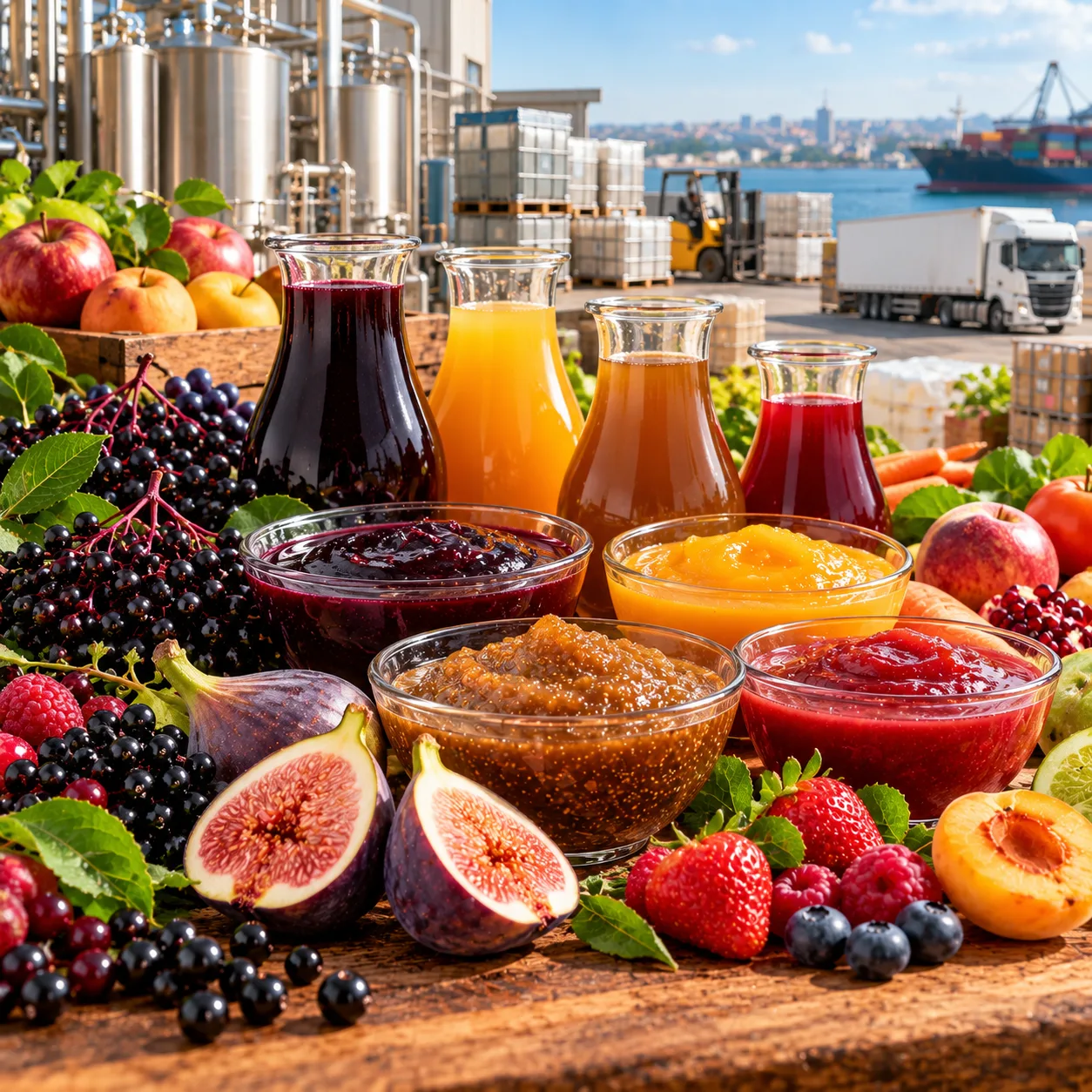
Different formats for different manufacturing requirements
Juice Concentrates
Juice concentrates contain a high level of soluble fruit solids after much of the natural water has been removed. This can reduce shipping volume and allows manufacturers to dose concentrated fruit solids into a formulation.
Typical technical review includes Brix, titratable acidity, pH, specific gravity, clarity, color, pulp, microbiological limits and reconstitution information.
Fruit & Vegetable Purees
Purees retain more pulp, fine fibers and suspended fruit solids than clarified juice. They are often selected where the formulation benefits from fruit body, texture and a more recognizable whole-fruit character.
Commercial review can include Brix, pH, acidity, viscosity or Bostwick consistency, screen size, seed status, color, pack format and storage conditions.
NFC Juices
Not-from-concentrate juice remains near natural single-strength concentration and is selected when the formulation benefits from a less concentrated juice format.
NFC projects commonly consider natural Brix, acidity, pulp, flavor profile, processing method, storage conditions and the additional water contributed to the formula.
Commercial fruit profiles vary widely.
Fruit selection affects much more than flavor. Natural acidity, soluble solids, color, pulp, aroma intensity and processing behavior can determine which fruit and ingredient format is appropriate for a commercial formulation.
Apple
Apple has a relatively mild fruit profile dominated by malic acidity and is widely useful when manufacturers want sweetness and fruit solids without an overpowering aroma.
Clarified commercial apple concentrate is commonly available around 70° Brix. It is useful in beverages, cider, bakery fillings, sauces, confectionery and blended fruit systems.
White Grape
White grape provides high soluble solids, relatively mild flavor and pale color. It can support stronger fruit profiles while contributing fruit-derived sweetness and solids.
Commercial white grape concentrate is commonly around 68° Brix. Buyers should also check acidity, sulfite status, clarity and origin for the exact product.
Orange & Citrus
Orange, lemon, lime and grapefruit provide characteristic citrus aroma and predominantly citric acidity. Pulp level and flavor retention can be important in citrus applications.
Commercial orange concentrate is commonly around 65° Brix, while NFC orange remains near natural single-strength solids.
Tart Cherry & Red Fruits
Tart cherry delivers pronounced red-fruit aroma and strong malic acidity. Cranberry and similar fruits can provide even sharper tartness, while pomegranate combines acidity with dark-fruit complexity.
High-solids cherry and pomegranate concentrates are commonly available around the mid-60s Brix range and are used where stronger fruit character is required.
Berries
Strawberry, raspberry, blueberry, blackberry and blackcurrant provide highly recognizable flavor and strong natural color. Purees retain fruit body, while juice concentrate formats provide greater soluble-solids density with less pulp.
Single-strength strawberry puree, for example, is commercially available around 8° Brix, while concentrated puree formats may reach approximately 28° Brix.
Mango & Tropical Fruits
Mango offers ripe tropical aroma, yellow-orange color and substantial body. Passion fruit contributes much stronger acidity and aroma, while pineapple provides a brighter sweet-acid tropical profile.
Mango is available in single-strength and concentrated puree formats; commercial concentrated mango puree is commonly offered around 28° Brix.
What matters beyond the fruit name
Industrial buyers generally need more information than simply “apple concentrate” or “mango puree.” Product format and analytical parameters determine how an ingredient behaves during manufacturing and how much usable fruit material the buyer receives.
- Brix / soluble solids: important for concentration, sweetness contribution, yield and reconstitution calculations.
- Titratable acidity: helps quantify the fruit's acid contribution and flavor balance.
- pH: relevant to formulation, color, processing and stability.
- Specific gravity: useful for industrial metering and weight-to-volume conversion.
- Clarity and pulp: important when choosing between clear beverages and more textured products.
- Viscosity / Bostwick: especially important for purees and concentrated purees.
- Screen size: relevant to puree refinement, mouthfeel and pumping equipment.
- Color: critical for berries, cherry, pomegranate and other strongly colored fruits.
- Microbiological specification: should match the manufacturer's ingredient quality program.
- Ingredient and allergen declaration: confirms the exact composition and any declared allergens or additives.
- Origin and crop: important for traceability, consistency and supply planning.
- Certifications: may include organic, Kosher, Halal or other project-specific documentation.
Packaging, storage and logistics matter too.
Packaging
Industrial fruit ingredients may be available in pails, bag-in-box systems, lined drums, totes or larger bulk formats depending on the product and sourcing program.
Pack selection should consider plant usage rate, handling equipment and the amount of material that can be consumed after opening.
Storage
Products may require frozen, refrigerated or ambient aseptic storage depending on how they are processed and packed.
Similar fruits can have different storage requirements between concentrate, puree and NFC formats, so the current supplier specification should always be checked.
Commercial evaluation
Ingredient cost should be compared using usable solids, concentration, packaging, freight, storage, minimum order quantity and processing requirements—not price per pound or kilogram alone.
Crop origin and seasonality can also influence price, availability and sensory consistency.
Where bulk fruit ingredients are used
Beverages
Juice drinks, carbonated soft drinks, sparkling water, tea, lemonade, energy drinks, functional beverages, sports drinks, cocktail mixes and mocktails.
Concentrates are often selected for efficient fruit solids and controlled dilution, while puree provides additional body and NFC juice supports single-strength juice character.
Brewing & Fermentation
Craft beer, hard cider, kombucha, fruit wine, mead and other fermentation applications use fruit ingredients for aroma, fermentable sugars, acidity, color and post-fermentation flavor adjustment.
Dairy & Cultured Foods
Yogurt, drinkable yogurt, dairy desserts and fruit-on-the-bottom preparations commonly use purees and formulated fruit preparations for flavor, color and texture.
Bakery
Cakes, muffins, pastries, doughnuts, fillings, fruit swirls, glazes and snack cakes can use concentrates for flavor with reduced water or purees where fruit body is desired.
Confectionery
Chocolate centers, gummies, fruit gels, fondants, chews and layered confectionery use fruit concentrates and purees for acidity, color and concentrated fruit flavor.
Frozen Desserts
Ice cream, sorbet, frozen yogurt and fruit variegates use mango, strawberry, raspberry, cherry, peach, citrus and other fruit ingredients for flavor, color and texture.
Jams & Fruit Preparations
Fruit purees provide body and pulp in jams, preserves and fruit preparations, while concentrates can increase soluble fruit solids and strengthen fruit flavor.
Sauces & Dressings
Salad dressings, vinaigrettes, barbecue sauces, dipping sauces, marinades and glazes can use fruit ingredients to provide sweetness, acidity, body and distinctive flavor.
Prepared & Nutrition Foods
Fruit-and-grain products, selected baby and toddler foods, meal components, snack products and prepared foods can use fruit ingredients when the format and specification meet the finished-product requirements.
Explore industrial applications Browse 200 application guides
What to include in a sourcing request
A well-defined inquiry can reduce unnecessary back-and-forth and make it easier to compare commercially relevant options.
- Fruit or vegetable: the ingredient you are looking for.
- Format: juice concentrate, single-strength puree, concentrated puree, NFC juice or another format.
- Application: beverage, dairy, bakery, confectionery, brewing, sauce or another industrial use.
- Technical requirement: target Brix, acidity, pH, pulp, clarity, viscosity or other critical parameters where known.
- Quantity: trial requirement, initial commercial order and estimated annual volume.
- Packaging: pail, bag-in-box, drum, tote or bulk requirement.
- Storage capability: frozen, refrigerated or ambient/aseptic as appropriate.
- Certifications: organic, Kosher, Halal or other required documentation.
- Destination: delivery location for logistics planning.
- Timing: trial, launch or purchasing schedule.
If the exact technical specification is not yet known, providing the application, approximate volume and desired fruit profile still gives useful context for the project.
Questions commercial buyers often ask
Where is Food Ingredients USA, Inc. located?
The business address shown on this website is Buffalo, New York.
What products do you focus on?
The site focuses on bulk juice concentrates, fruit and vegetable purees and pastes, selected NFC juices and related commercial fruit ingredients for food and beverage manufacturing.
Which fruits are commonly considered for commercial projects?
Project requirements can involve apple, white grape, orange and other citrus fruits, pomegranate, tart cherry, strawberry, raspberry, blueberry, mango, pineapple, passion fruit, peach, apricot and many other fruits depending on the required format and application.
What are some typical commercial concentrate Brix levels?
Examples include apple juice concentrate around 70° Brix, white grape around 68° Brix and orange or pomegranate around 65° Brix. These are indicative commercial examples and not universal specifications.
How are purees different from juice concentrates?
Purees retain more fruit pulp, fibers and suspended solids, giving them greater body and texture. Juice concentrates contain much higher soluble solids with less water and generally less pulp.
Which industries use bulk fruit ingredients?
Applications include beverages, brewing, dairy, bakery, confectionery, frozen desserts, jams and fruit preparations, salad dressings, sauces, marinades, baby foods, snacks and other prepared foods.
Which technical specifications should I include in an inquiry?
Where known, include Brix, acidity, pH, pulp or clarity, viscosity, packaging, storage requirements and certifications together with approximate volume, destination and application.
Do you sell retail quantities?
The site is designed primarily for commercial and industrial inquiries. Minimum order quantities and available pack formats vary by product and supply program.
Are all fruit ingredients continuously available?
Availability can vary by fruit, crop, origin, format, certification and supplier program. Current availability should be confirmed for the specific sourcing request.
How can I start a sourcing request?
Use the detailed contact form or floating quick-contact form and include the ingredient, format, approximate quantity, destination, application and timing.