Orange NFC Juice
Single-strength sweet orange juice with characteristic citrus aroma, natural orange color and balanced sweetness and acidity for beverages, dairy, fermentation, frozen desserts and commercial food applications.
Classic sweet-orange juice supplied at natural single strength.
Sweet orange (Citrus sinensis) is one of the world's principal juice fruits. The fruit consists of juice-filled vesicles arranged in segments beneath an aromatic peel containing essential citrus oils. Mature processing oranges provide the familiar balance of natural sugars, citric acid, orange aroma, yellow-orange color and fine pulp.
NFC orange juice is extracted directly from mature fruit and supplied without the concentration-and-reconstitution step used for concentrate. Commercial processors can adjust pulp and orange-oil levels within the applicable product specification to achieve the desired sensory and physical profile.
- Primary species: Citrus sinensis
- Yellow-orange to deep-orange characteristic appearance
- Sweet citrus flavor balanced by natural citric acidity
- Commercial NFC generally around 10–14.5 °Brix
- Different pulp levels and processing formats are available
- Conventional and certified organic supply programs may be available
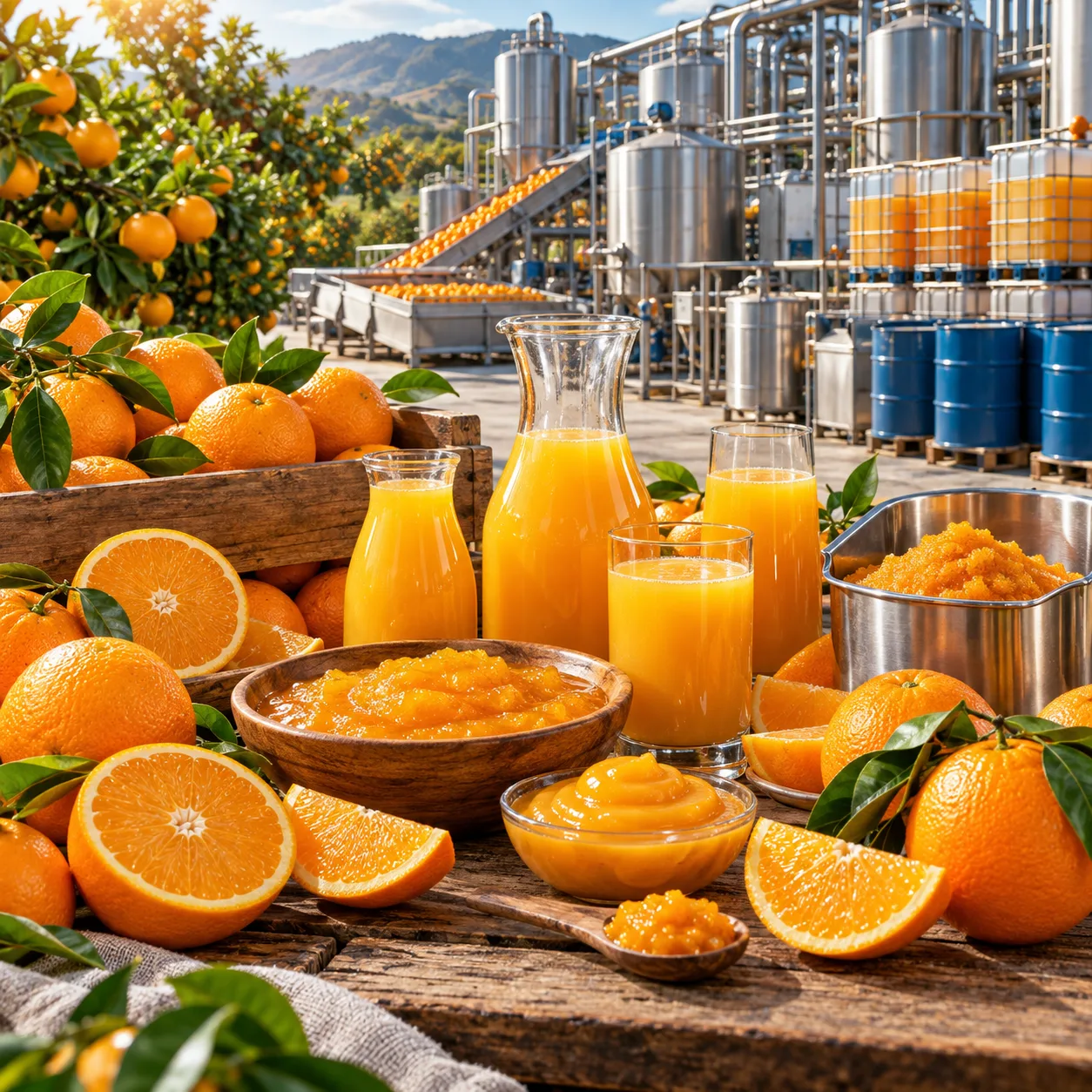
Processing season and cultivar influence color, solids and flavor.
Hamlin
Hamlin is an important early-season processing orange. It generally has relatively few seeds and supports juice production before later varieties reach maturity.
Hamlin juice can be lighter in color and milder in flavor than late-season Valencia, so seasonal blending is common in industrial orange-juice programs.
Midseason Oranges
Pineapple and other midseason sweet oranges help bridge the production period between early Hamlin and late Valencia crops.
Their contribution to Brix, acidity, color and aroma varies according to variety, maturity and growing conditions.
Valencia
Valencia is a major late-season juicing orange and is particularly valued for good flavor, color and soluble-solids production.
It is an important component of premium NFC blends, and some commercial juice programs are produced primarily or exclusively from Valencia fruit.
Orange NFC is inherently seasonal. Processors may blend compatible early-, mid- and late-season juices to achieve a more consistent year-round Brix, acidity, color and flavor profile.
Brix, acidity, ratio, pulp and oil define commercial orange-juice performance.
Industrial orange NFC programs commonly specify corrected Brix, titratable acidity, pH, Brix-to-acid ratio, pulp, citrus-oil content, color, flavor and microbiological criteria.
Typical Purchasing Parameters
- Corrected or direct soluble solids in °Brix
- Titratable acidity as citric acid
- pH
- Brix-to-acid ratio
- Fine-pulp or centrifugable-pulp level
- Orange-oil specification where applicable
- Color and sensory acceptance criteria
- Microbiological limits
Published Commercial Example
One industrial Brazilian orange NFC specification lists corrected Brix of approximately 10.2–14.5 °Bx, acidity of 0.51–0.85% as citric acid and pH at or below 4.
The same program specifies a Brix-to-acid ratio of about 14.5–20, fine pulp around 6–12% and orange oil around 0.015–0.035% by volume.
These are supplier and regulatory references rather than universal limits for every crop. Confirm the current product specification and lot-specific Certificate of Analysis before purchasing.
FDA uses 11.8 °Brix for orange juice.
U.S. Regulatory Reference
FDA uses 11.8 °Brix as the minimum single-strength reference when calculating juice percentage for beverages containing orange juice from concentrate.
U.S. standards for orange juice from concentrate likewise require the finished reconstituted juice to contain at least 11.8% orange-juice soluble solids.
Natural NFC Variation
Direct NFC is produced from fruit rather than standardized by adding water back to concentrate. Crop Brix can therefore vary naturally with variety, season, maturity and growing conditions.
Current commercial NFC specifications include products from approximately 10.2 °Brix upward, while other suppliers specify minimum values around 11.2 °Brix.
Brix alone does not describe orange NFC quality.
Brix-to-Acid Ratio
The ratio between soluble solids and acidity strongly affects perceived sweetness and tartness.
Seasonal blending can help processors maintain a more consistent sensory balance as orange varieties change through the harvest year.
Pulp Level
Fine orange pulp contributes natural cloud and mouthfeel. Commercial NFC can be supplied at different pulp levels according to beverage style and filling requirements.
A current industrial specification lists approximately 6–12% fine pulp.
Orange Oil
Small quantities of peel-derived orange oil contribute important citrus aroma, but excess oil can alter flavor intensity.
Industrial programs may therefore specify oil concentration alongside Brix, acidity and pulp.
Fresh citrus aroma is sensitive to heat, oxygen and storage.
Heat Treatment
Commercial NFC is typically pasteurized or otherwise processed to control microorganisms and enzymatic activity.
Excessive thermal exposure can reduce fresh orange top notes and produce a more cooked sensory profile.
Oxygen Exposure
Oxygen during processing and storage can affect citrus aroma, color and overall fresh-fruit character.
Low-oxygen handling and appropriate package systems are useful when premium flavor retention is important.
Cloud Stability
Natural orange juice contains fine suspended particles that create its characteristic cloud.
Pulp level, enzyme control, storage temperature and finished formulation can all influence settling and visual stability.
Where orange NFC juice is used commercially.
100% Orange Juice
NFC is a primary ingredient for premium single-strength orange juice where not-from-concentrate positioning is required.
Seasonal juices may be blended to achieve consistent color, acidity, aroma and sweetness throughout the year.
Juice & Multi-Fruit Blends
Orange NFC is widely used with mango, pineapple, peach, passion fruit, berries, carrot and other fruits and vegetables.
Its citrus acidity and recognizable aroma provide a familiar base for complex juice blends.
Smoothies & Functional Beverages
Orange NFC contributes natural juice solids, citrus acidity and strong consumer-recognizable flavor to smoothies and functional beverage formulations.
Pulp level can be selected around the required texture and processing system.
Nutrition & Specialty Drinks
Orange juice is frequently used as a fruit base in nutrition drinks and specialty beverage systems because its flavor combines well with other fruit and botanical ingredients.
Finished pH, protein compatibility and heat stability should be validated in complex formulations.
Sparkling Beverages
Lower-pulp NFC can be used in sparkling juice, citrus sodas, spritz-style drinks and carbonated fruit beverages.
Pulp and oil levels should be matched to carbonation, filling equipment and desired visual appearance.
Yogurt & Dairy Beverages
Orange NFC can be incorporated into selected drinking yogurts, cultured dairy products and dairy desserts.
Because orange juice is acidic, protein stability and addition sequence require careful formulation.
Plant-Based Beverages
Orange works in oat, coconut and other plant-based beverage systems, particularly in tropical or breakfast-style formulations.
Emulsion and protein stability should be evaluated at the intended juice dosage and finished pH.
Beer, Cider & Fermented Drinks
Orange NFC can provide fermentable sugars and citrus character in fruit beer, cider-style products, hard seltzer, kombucha and other fermented beverages.
Fermentation and addition timing can affect retention of volatile orange aroma.
Fruit Wine & Mead
Orange juice can be used as part of fruit-wine, mead and mixed-fermentation formulations.
Incoming Brix, pH and acidity should be included in the fermentation balance rather than treated as fixed values.
Cocktails & Mocktails
Orange NFC is a core ingredient in cocktails, mocktails, punches, spritzes and foodservice beverage programs.
It pairs naturally with other citrus, tropical fruit, ginger, herbs and warm spices.
Ice Cream & Frozen Desserts
Orange juice can provide bright citrus flavor in sorbet, ice pops, frozen yogurt, granita and selected ice cream systems.
Juice Brix and acidity should be included when balancing sweetness and freezing behavior.
Bakery & Snack Fillings
Applications include cake systems, muffins, glazes, snack fillings and dessert preparations.
Thermal processing can reduce fresh citrus aroma, so finished flavor should be evaluated after baking or cooking.
Confectionery
Orange NFC can contribute genuine juice flavor and acidity to gummies, jellies, fruit chews and confectionery centers.
Concentrate may be more efficient when very high fruit solids are needed with minimal added water.
Sauces, Dressings & Marinades
Orange NFC can provide citrus acidity and aroma in marinades, salad dressings, glazes and sweet-savory sauces.
It pairs particularly well with ginger, chili, herbs, soy-style seasonings and roasted flavors.
Foodservice
Bulk NFC can support breakfast service, juice bars, cocktails, desserts and culinary production without squeezing fresh oranges at the point of use.
Smaller bag formats can be appropriate where a full industrial drum would exceed normal throughput.
Prepared-Food Systems
Orange juice can be used in fruit sauces, ready-meal glazes, marinades and other prepared-food formulations.
Its contribution to water, sugar and acidity should be included in the complete formulation balance.
Select the ingredient format around flavor positioning and logistics.
Orange NFC Juice
NFC remains at approximately natural single strength and avoids the evaporation-and-reconstitution step used for concentrate.
It is particularly appropriate where the product specification or consumer positioning specifically calls for not-from-concentrate juice.
Orange Juice Concentrate
Industrial orange concentrate is commonly supplied around 60–66 °Brix, with much of the natural water removed.
Concentrate offers substantially greater freight and storage efficiency but is a different ingredient format from NFC.
Reconstituted orange concentrate can produce high-quality orange juice, but it should not be represented as NFC. Define the required format before requesting commercial quotations.
Frozen, refrigerated and aseptic programs support different volumes.
Bags & Bag-in-Box
Commercial orange NFC can be supplied in smaller aseptic packs for development, foodservice and lower-volume manufacturing.
Current supplier programs include approximately 3–25 kg bag formats depending on product and processor.
Industrial Drums
Bulk orange NFC is widely supplied in frozen or aseptic drums. Published programs include approximately 180–200 kg drums, with selected products supplied around 260 kg.
Drum size should be matched to plant throughput and storage capability.
IBC & Tanker
Larger industrial programs can include approximately 1,000 kg IBC containers and tanker quantities around 25 metric tons.
Tanker supply is most appropriate for established high-volume manufacturing with suitable receiving and storage infrastructure.
Storage is product-specific. Commercial programs include frozen storage around -18°C, refrigerated conditions and aseptic systems. Follow the exact supplier specification for unopened shelf life, storage temperature and handling after opening or thawing.
Specify season, pulp and ratio before comparing offers.
Technical Requirements
- True directly expressed NFC juice
- Preferred variety or acceptable seasonal blend
- Corrected Brix target and crop tolerance
- pH and titratable acidity
- Brix-to-acid ratio
- Fine-pulp level
- Orange-oil specification where relevant
- Color, flavor and microbiological requirements
Commercial Requirements
- Conventional or certified organic grade
- Preferred country or region of origin
- Trial quantity and annual-volume forecast
- Bag, drum, IBC or tanker preference
- Frozen, refrigerated or aseptic receiving capability
- Delivery destination in the United States
- Required shipment schedule
- Certification and documentation requirements
Orange NFC offers should not be compared by Brix alone. Variety, Brix-to-acid ratio, pulp, citrus oil, color and processing history can create noticeably different finished-product performance.
Documents commonly reviewed during supplier approval.
Technical Documentation
- Current product specification
- Lot-specific Certificate of Analysis
- Complete ingredient declaration
- Pulp and oil specification where applicable
- Microbiological acceptance limits
- Storage and shelf-life instructions
- Packaging and handling specification
Certification & Supply Documents
- Organic certificate when applicable
- Food-safety certification information
- Kosher or Halal documentation when requested
- GMO statement where required
- Country-of-origin information
- Traceability and lot identification
- Commercial quotation and delivery terms
See how ingredient format affects formulation.
Orange NFC juice sourcing questions
What is orange NFC juice?
NFC means not from concentrate. Orange NFC is juice extracted directly from mature sweet oranges and supplied at approximately natural single strength without first concentrating and then reconstituting it.
What is the typical Brix?
Published commercial orange NFC specifications range roughly from 10.2–14.5 °Brix depending on variety, crop and supplier. FDA uses 11.8 °Brix as the single-strength reference for orange juice.
What are typical pH and acidity values?
Commercial examples commonly show titratable acidity around 0.5–1.2% as citric acid and pH below approximately 4. Exact values vary with variety and harvest maturity.
Which orange varieties are important for NFC production?
Hamlin is an important early-season processing orange, Pineapple is a traditional midseason variety and Valencia is a major late-season juicing orange valued for color, flavor and soluble-solids production.
Why is Brix-to-acid ratio important?
The ratio provides a useful measure of sweetness relative to acidity. Two orange juices can have the same Brix but taste substantially different when acid levels vary.
Can orange NFC be supplied with different pulp levels?
Yes. Pulp is commonly adjusted according to the required beverage style. One industrial NFC specification lists approximately 6–12% fine pulp.
What is bulk orange NFC used for?
Major applications include 100% juice, juice blends, smoothies, nutrition and functional beverages, sparkling drinks, dairy and plant-based products, fermented beverages, frozen desserts, bakery, confectionery, sauces, marinades and foodservice.
How does NFC differ from orange concentrate?
NFC remains near natural single strength. Orange concentrate has substantial water removed and is commonly supplied around 60–66 °Brix, making it much more freight-efficient.
Is organic orange NFC available?
Yes. Certified organic orange NFC is commercially available from selected processors. Request current certification for the exact product, origin and production program being quoted.
How is commercial orange NFC packaged?
Commercial formats include small aseptic bags and bag-in-box, industrial drums around 180–260 kg, approximately 1,000 kg IBCs and tanker-scale shipments for high-volume programs.