Carrot NFC Juice
Naturally sweet orange carrot juice supplied at single strength for vegetable beverages, smoothies, baby food, soups, sauces and prepared foods, with conventional and organic bulk options subject to availability.
Mild vegetable sweetness, orange color and natural carrot character.
Carrot (Daucus carota) is a root vegetable grown in multiple color types, although orange carrots dominate mainstream juice production. Mature orange carrots develop a naturally sweet, mildly earthy flavor and characteristic orange pigmentation.
NFC carrot juice is produced from washed, sound carrots that are crushed or milled and pressed or otherwise extracted. The juice is then finished to the required pulp level and processed without an evaporation-and-reconstitution step.
- Produced from mature orange carrots
- Single-strength not-from-concentrate format
- Naturally mild, sweet and vegetal flavor
- Bright orange to deep orange appearance
- Cloudy and more highly finished juice formats may be available
- Conventional and certified organic programs are available
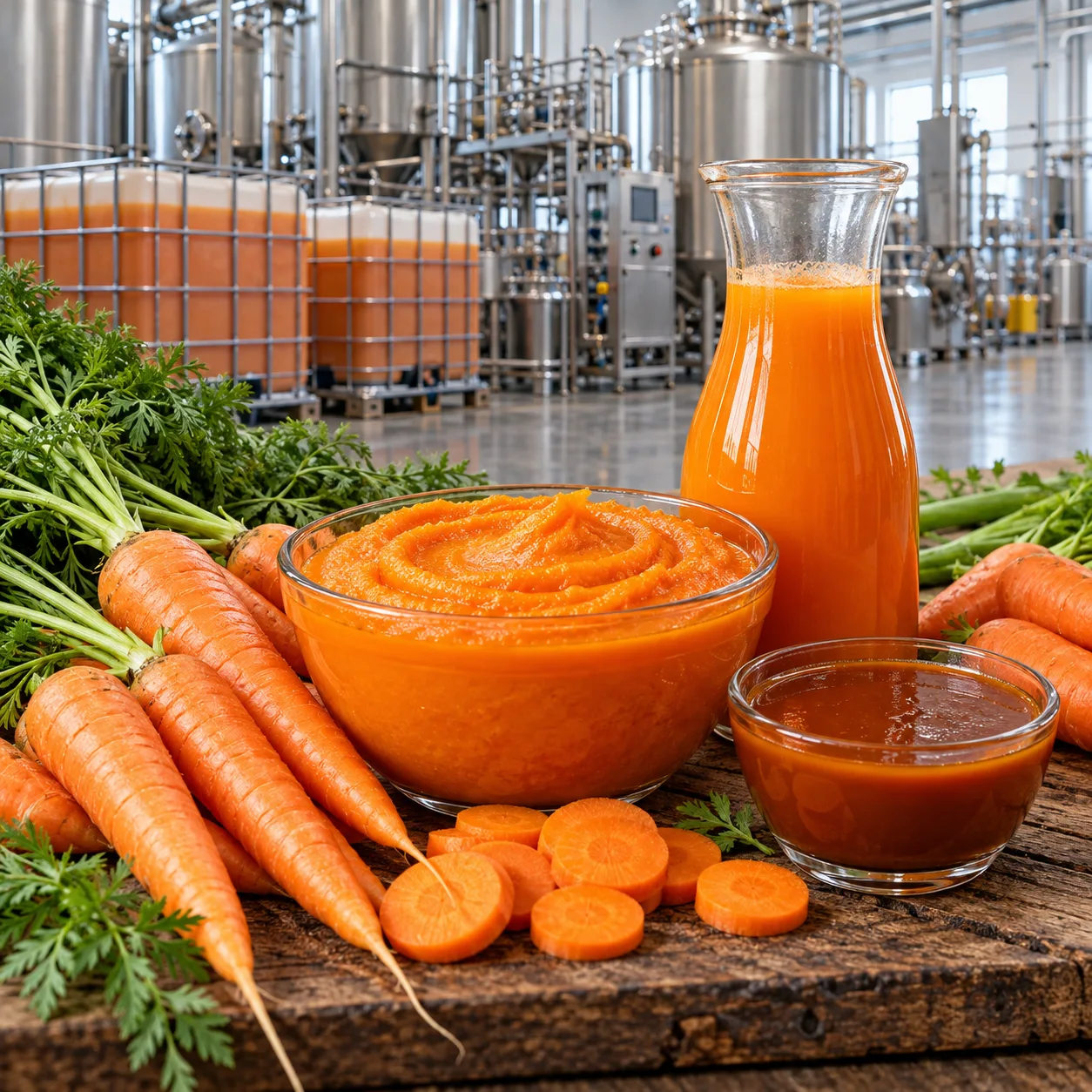
Crop maturity influences sweetness, flavor and juice yield.
Flavor & Soluble Solids
Mature carrots contain natural sugars that create a mild sweetness alongside their characteristic fresh vegetable flavor. Variety, maturity, growing conditions and harvest timing can all influence soluble solids and sensory intensity.
This relatively mild flavor makes carrot useful both as the principal vegetable juice and as a supporting ingredient in fruit-and-vegetable blends.
Color & Processing
Orange carrot juice has a characteristic orange appearance associated with naturally occurring carrot pigments. Color can vary from yellow-orange to deeper orange according to variety, maturity, extraction and thermal processing.
Heat, oxygen exposure and extended storage can change both color and flavor, so representative samples should be evaluated after the intended commercial process.
Carrot is an agricultural raw material. Brix, flavor, color and acidity vary with variety, origin and crop conditions, so commercial purchasing should use defined specification ranges rather than one fixed value.
Key specifications for commercial NFC carrot juice.
Published commercial orange carrot NFC specifications vary according to whether the juice is natural, acidified, cloudy or more highly clarified. The current supplier specification and lot-specific Certificate of Analysis should always determine acceptance.
Physical & Chemical Parameters
- Soluble solids measured as °Brix
- pH and titratable acidity
- Insoluble-solids or pulp level where relevant
- Orange color and characteristic carrot aroma
- Clarity or turbidity for specified juice style
- Absence of objectionable fermented or scorched notes
- Ingredient declaration for acidified grades
Published Commercial References
Published orange carrot NFC examples include approximately 7–11 °Brix and pH around 4.0–4.8. Another commercial NFC supplier lists a typical value near 9 °Brix.
Non-acidified carrot juice can have pH above 5, while commercial acidified products may incorporate lemon juice or another permitted acid source to obtain a lower pH.
Do not assume all NFC carrot juices have the same pH. Natural and acidified grades can differ materially, and this distinction affects formulation, processing and ingredient declaration.
Specify pulp level and acidification before requesting offers.
Cloudy NFC Juice
Cloudy carrot juice retains more suspended vegetable solids and provides greater body and visual opacity. It is well suited to vegetable juices, smoothies and formulations where natural carrot character is desirable.
Finished / Lower-Pulp Juice
More highly finished carrot juice contains fewer suspended solids and may be preferred where a lighter mouthfeel, more consistent pumping or reduced sediment is required.
Acidified NFC Carrot Juice
Some commercial carrot NFC programs use lemon juice or permitted food acids to reduce pH. Acidified and natural juice should be treated as separate specifications because flavor, ingredient declaration and processing requirements differ.
Natural carrot juice requires appropriate low-acid processing controls.
Natural NFC Carrot Juice
Unacidified carrot juice can have pH above 4.6 and should therefore not be assumed to be naturally acid-stable. Commercial preservation must be designed around the actual pH, packaging, storage temperature and intended shelf life.
Frozen and refrigerated systems are common options for maintaining product quality where appropriate.
Aseptic / Acidified Programs
Commercial aseptic carrot juice is available, including acidified products packed into sterile bags. Shelf stability depends on the validated process and complete product specification—not simply on the use of aseptic packaging.
Confirm whether the offered material requires refrigerated, frozen or ambient storage before purchase.
Where NFC carrot juice is used commercially.
Vegetable Juices
Carrot NFC is a core ingredient in vegetable juice blends and mixed vegetable drinks. Its mild sweetness can soften sharper vegetable flavors while contributing orange color and natural solids.
Common partners include tomato, beet, celery, cucumber and other vegetable juice ingredients.
Fruit & Vegetable Blends
Carrot combines particularly well with apple, orange, mango, pineapple, lemon and other fruit juices in blended beverages.
Its relatively mild profile allows fruit aroma to remain recognizable while carrot adds vegetable identity and body.
Smoothies & Functional Beverages
Cloudy NFC carrot juice can add vegetable solids, color and mild sweetness to smoothies, wellness beverages and thicker nutrition drinks.
Pulp level and sediment behavior should be evaluated during formulation and shelf-life trials.
Baby Food & Toddler Products
Carrot juice can be used in infant and toddler formulations, vegetable blends and fruit-and-vegetable products where a smooth carrot component is required.
These programs may require tighter pesticide-residue, nitrate, microbiological and traceability requirements.
Soups & Savory Bases
NFC carrot juice provides mild sweetness, vegetable flavor and orange color in soups, bisques, stock systems and savory bases.
It can complement pumpkin, squash, tomato, sweet potato, ginger and other vegetables or spices.
Sauces, Dressings & Marinades
Carrot juice can contribute vegetable sweetness and color to sauces, dressings, marinades and condiment systems.
Acidified juice may be particularly useful in formulations that already contain citrus, vinegar or other acidic ingredients.
Prepared Meals & Culinary Products
Applications include ready meals, vegetable preparations, cooking sauces, grain bowls and other prepared-food systems where carrot flavor or vegetable solids need to be distributed uniformly.
Fermented & Specialty Drinks
Carrot juice can be used in selected fermented vegetable drinks, kombucha-style formulations and specialty beverage bases.
Because fermentation alters sugars, acidity and flavor, commercial trials should follow the complete fermentation and finishing process.
Bulk formats for development through high-volume production.
Bag-in-Box
Commercial aseptic programs include approximately 18–20 kg bag-in-box formats. These can be useful for foodservice, product development and smaller manufacturing batches.
Aseptic & Frozen Drums
Industrial carrot NFC is commercially available in aseptic drums around 200 kg and frozen drums around approximately 180–200 kg, depending on processor and specification.
Totes & Bulk Tanker
High-volume programs may use totes, IBCs or bulk tanker supply where compatible with product stability, transport distance and the customer's receiving system.
Packaging alone does not define storage conditions. Confirm whether the exact carrot NFC product is frozen, refrigerated, chilled aseptic or suitable for another validated storage system.
Define NFC type, pH and pulp level before comparing offers.
Technical Requirements
- Natural or acidified NFC juice
- Required °Brix range
- pH and titratable acidity
- Cloudy or lower-pulp specification
- Insoluble-solids or turbidity limits
- Color and sensory expectations
- Microbiological acceptance criteria
- Nitrate or baby-food requirements where applicable
Commercial Requirements
- Conventional or certified organic status
- Ingredient declaration and acidification method
- Trial quantity and forecast annual volume
- Bag-in-box, drum, tote or tanker preference
- Frozen, refrigerated or aseptic receiving capability
- Country-of-origin requirements
- Delivery destination and timing
- Certification and documentation requirements
Because NFC carrot juice contains its natural water, compare commercial offers on total delivered cost, storage requirements and usable juice volume rather than ingredient price per pound alone.
Documents commonly reviewed during supplier approval.
Technical Documentation
- Current product specification
- Lot-specific Certificate of Analysis
- Microbiological specification
- Complete ingredient declaration
- Storage and shelf-life information
- Packaging specification
- Processing and handling instructions
Certification & Supply Documents
- Organic certificate when applicable
- Food-safety certification information
- Baby-food documentation where required
- Kosher or other requested certification
- Country-of-origin documentation
- Traceability and lot identification
- Commercial quotation and delivery terms
Explore formulation and sourcing considerations.
Carbonated Soft Drinks
Carbonated Soft Drinks with Juice Ingredients: Sourcing & Process Considerations
Juice IngredientsBakery Fillings
Using Juice Ingredients in Bakery Fillings: Formulation Guide
Juice IngredientsSalad Dressings
Salad Dressings with Juice Ingredients: Sourcing & Process Considerations
Carrot NFC juice sourcing questions
What is NFC carrot juice?
NFC means not from concentrate. Carrot NFC juice is produced at single strength without first concentrating the juice and later adding water back. Commercial processing generally includes extraction, finishing, pasteurization and appropriate bulk filling.
What is the typical Brix?
Published commercial orange carrot NFC products commonly fall around 7–11 °Brix, with some suppliers describing approximately 9 °Brix as typical. Actual soluble solids vary with variety, crop and maturity.
What is the typical pH?
Product specifications differ. Some commercial orange carrot NFC programs specify approximately pH 4.0–4.8, while natural non-acidified carrot juice can be above pH 5. Acidified products may use lemon juice or another permitted acid source to lower pH.
What is the difference between cloudy and clarified carrot juice?
Cloudy juice retains more suspended vegetable solids and provides greater body and opacity. More highly finished juice contains fewer suspended particles and can provide a lighter texture and reduced sediment.
What is bulk carrot NFC juice used for?
Major applications include vegetable juices, fruit-and-vegetable blends, smoothies, functional beverages, baby food, soups, sauces, dressings, prepared meals, foodservice products and selected fermented drinks.
Is organic carrot NFC juice available?
Yes. Certified organic NFC carrot juice is commercially available from selected processors. Request current organic certification covering the exact product being quoted.
How is commercial carrot NFC juice packaged?
Commercial formats include approximately 18–20 kg aseptic bag-in-box packs, roughly 180–200 kg frozen drums, approximately 200 kg aseptic drums and bulk tanker supply for high-volume users.
Can NFC carrot juice be stored at ambient temperature?
That depends on the exact formulation, pH, process and package. Some products require frozen or refrigerated storage, while selected aseptically processed products use other validated storage conditions. Follow the supplier-specific specification rather than assuming ambient stability from the package type.
What information should I provide for a quote?
Specify natural or acidified NFC carrot juice, conventional or organic grade, required Brix and pH, cloudy or finished style, approximate quantity, packaging preference, destination and delivery timing, together with any microbiological, baby-food or certification requirements.