Cranberry Puree
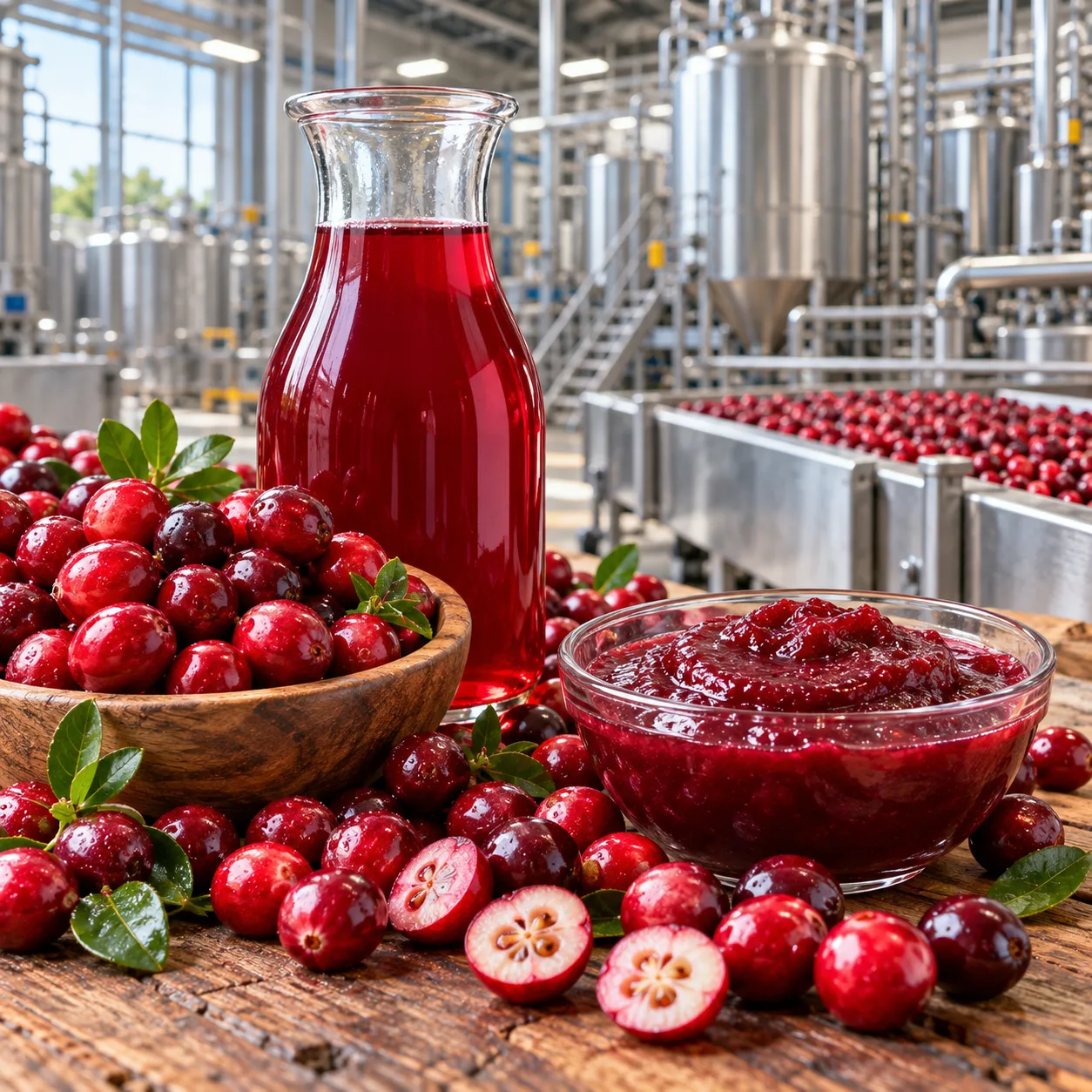
Tart, deeply colored cranberry puree for commercial beverages, brewing, dairy, bakery, sauces, frozen desserts and fruit preparations, with conventional and organic sourcing options subject to current availability.
Bold cranberry flavor with the body of puree.
Cranberries are naturally tart, strongly flavored red berries with comparatively low soluble solids and high acidity versus sweeter fruits such as apple, pear or mango.
Puree retains suspended cranberry fruit material rather than behaving like a fully clarified juice. This provides greater body, cloud and fruit texture while preserving cranberry's characteristic ruby-red appearance and clean sweet-tart profile.
Cranberry puree can be useful when formulators want recognizable cranberry character but do not need the extreme concentration of cranberry juice concentrate.
- Strong tart cranberry flavor and red-fruit character
- More body and suspended solids than clarified juice
- Conventional and organic options may be available
- Aseptic and frozen formats may be available
- Commercial packaging depends on supplier program
- Origin, crop and analytical values can vary
Representative commercial characteristics
Cranberry is naturally a relatively low-Brix, high-acid fruit. Actual specifications vary by cultivar, crop, origin and processing method, so the current supplier specification should always govern purchasing.
Cranberry's relatively high acidity is central to its sensory identity. It can provide useful brightness in sweet formulations, but dosage should be developed together with sugar, other fruits, dairy components or savory ingredients rather than based on Brix alone.
What to check before approving cranberry puree
Puree performance depends on more than fruit name alone. Buyers should compare the physical and analytical characteristics that affect formulation, pumping, filling and finished-product consistency.
- Brix: confirms soluble solids and helps manage fruit contribution and batch consistency.
- pH: cranberry is naturally acidic, making pH important to flavor and finished formulation behavior.
- Titratable acidity: better represents the total acid contribution than pH alone and is important when balancing sweetness.
- Specific gravity: useful for industrial metering and converting between weight and volume.
- Consistency / viscosity: influences pumping, mixing, depositing and the amount of body the puree contributes.
- Screen or refinement: helps define the amount and size of suspended cranberry fruit material.
- Color: cranberry's red color can vary with fruit maturity, origin, processing, heat exposure and storage.
- Flavor and aroma: should be characteristically tart and cranberry-like without fermented, scorched or otherwise undesirable notes.
- Microbiological limits: should fit the buyer's production process and ingredient quality program.
- Ingredient statement: verify whether the commercial item is 100% cranberry puree or includes water or other declared ingredients.
- Origin and crop: useful for traceability, sensory consistency and supply planning.
Where cranberry puree fits
Smoothies & Beverage Bases
Cranberry puree can provide tartness, red color and fruit body in smoothies, juice blends, lemonades, refreshers, functional-style beverages, cocktail mixes and mocktails.
Because cranberry is naturally acidic, it is often blended with sweeter fruits such as apple, pear, grape, orange or tropical fruits to build a more balanced profile.
Brewing, Cider & Fermentation
Cranberry works well in fruit beers, sour styles, cider, kombucha, mead and other fermented beverages where tart fruit character and red color are desirable.
Puree adds fermentable fruit solids as well as flavor. Fermentation behavior, final gravity and sensory impact should therefore be evaluated at pilot scale.
Dairy & Plant-Based Products
Cranberry puree can be incorporated into yogurt, cultured dairy, plant-based yogurt alternatives, parfait preparations and dairy-fruit blends.
Its acidity should be introduced carefully in protein-containing systems. Addition sequence, fruit preparation design and final pH should be evaluated during development.
Bakery, Fillings & Fruit Preparations
Cranberry's sharp flavor pairs well with apple, orange, raspberry, cherry, cinnamon and warm bakery spices in fillings, swirls, pastries, muffins and seasonal bakery products.
Puree supplies fruit body, while sugar, starch, pectin or other structure-building ingredients may be used where a thicker bake-stable filling is required.
Sauces, Dressings & Glazes
Cranberry puree works in sweet-savory sauces, vinaigrettes, barbecue sauces, meat glazes, dipping sauces and marinades where acidity and fruit complexity are desirable.
It pairs especially well with citrus, apple, ginger, warm spices and savory seasonings.
Frozen Desserts & Confectionery
Cranberry can provide a bright counterpoint to sweetness in sorbet, frozen yogurt, ice cream variegates, fruit gels, gummies, chocolate centers and other confectionery systems.
Its acidity and color can remain prominent even when blended with sweeter bases, allowing cranberry to function as either the primary flavor or a supporting tart note.
Balance cranberry's acidity with the finished product.
Cranberry's natural tartness is one of its main advantages, but it also means formulation decisions should consider more than fruit dosage alone.
Sweetness and fruit pairing
Apple, white grape, pear and sweeter tropical fruits can soften cranberry's sharpness without completely masking its distinctive character. Citrus can move the profile in the opposite direction, creating a brighter and more acidic finished flavor.
Texture
Puree brings suspended fruit solids and greater body than clarified cranberry juice. This can be an advantage in smoothies, yogurt preparations, sauces and fillings but may require consideration of pumping, screens and filling equipment.
Color stability
Cranberry contributes attractive red fruit color, but final appearance can change with pH, heat, oxygen exposure and storage. Evaluate color after the full commercial process rather than relying only on the raw puree.
Heat processing
Heating can alter fresh cranberry aroma and color. Where the ingredient will be pasteurized, baked or cooked into a sauce, evaluate the finished processed product before establishing the final usage rate.
Aseptic and frozen cranberry puree
Commercial cranberry puree may be available in aseptic or frozen formats depending on supplier and processing system.
Representative aseptic supply programs can include approximately 42 lb bag-in-box, 425 lb drums and larger tote formats. Other suppliers may use different net weights, liners, drums or frozen pails.
Aseptic product can simplify warehouse handling when the specific product is designed for ambient unopened storage, while frozen puree requires suitable freezer capacity and thawing procedures.
Storage temperature, unopened shelf life and handling after opening should always be confirmed from the specification for the exact commercial product rather than assumed from the word “aseptic” or “frozen.”
Specify the requirement before comparing offers.
A useful commercial inquiry should include:
- Application: beverage, dairy, bakery, brewing, sauce or another intended use.
- Approximate volume: sample, trial, initial purchase and estimated annual demand.
- Technical requirements: target Brix, pH, acidity, viscosity, refinement or other parameters where known.
- Packaging: bag-in-box, pail, drum, tote or other preferred format.
- Storage capability: ambient aseptic, refrigerated or frozen.
- Certification: conventional, organic or other required documentation.
- Destination: delivery city, state or country.
- Timing: development, pilot, launch or regular purchasing schedule.
Commercial note: Cranberry is an agricultural ingredient and availability, crop origin, color, Brix, acidity, packaging and certification may vary. Confirm all purchasing requirements against the current supplier specification, certificate of analysis and quotation.
See how puree format affects formulation.
Questions cranberry puree buyers often ask
What is cranberry puree?
Cranberry puree is processed cranberry fruit that retains suspended fruit solids and body. Compared with clarified cranberry juice, it contributes more texture while maintaining cranberry's characteristic tart flavor and red-fruit profile.
What Brix is typical for cranberry puree?
Representative commercial aseptic cranberry puree can fall around 5.5–8.5° Brix, while approximately 7.5° Brix is a commonly referenced single-strength cranberry value. Actual product specifications vary by crop and processor.
What pH is typical for cranberry puree?
Cranberry is naturally acidic. A representative commercial puree specification may show a pH range around 2.0–3.9, but the exact lot and supplier specification should be used for formulation work.
What is bulk cranberry puree used for?
Major applications include smoothies, juice blends, brewing, cider, yogurt, plant-based products, bakery fillings, fruit preparations, sauces, marinades, frozen desserts and confectionery.
Is cranberry puree the same as cranberry juice concentrate?
No. Puree remains much closer to single-strength fruit and retains more suspended cranberry solids. Cranberry juice concentrate contains substantially higher soluble solids and considerably less water.
Is organic cranberry puree available?
Organic availability can vary by crop, origin and supplier program. Request current organic certification and product-specific documentation before purchase.
Are aseptic and frozen options available?
Depending on the supplier, cranberry puree may be available aseptically or frozen. Confirm storage temperature, pack configuration and shelf-life requirements for the exact product.
What commercial pack sizes are available?
Representative aseptic formats can include approximately 42 lb bag-in-box, 425 lb drums and larger totes. Frozen pails, drums or other configurations may also be available depending on the supplier.
Which technical specifications should I review?
Review Brix, pH, titratable acidity, specific gravity, consistency, refinement or screen, color, microbiological limits, ingredient statement, origin, packaging and storage instructions.
What information should I provide for a quote?
Include the intended application, required format, approximate quantity, destination, packaging preference, storage capability, certification requirements, timing and any target Brix, pH, acidity or consistency requirements.